Artists: Leslie Epsztein and Camille Gross

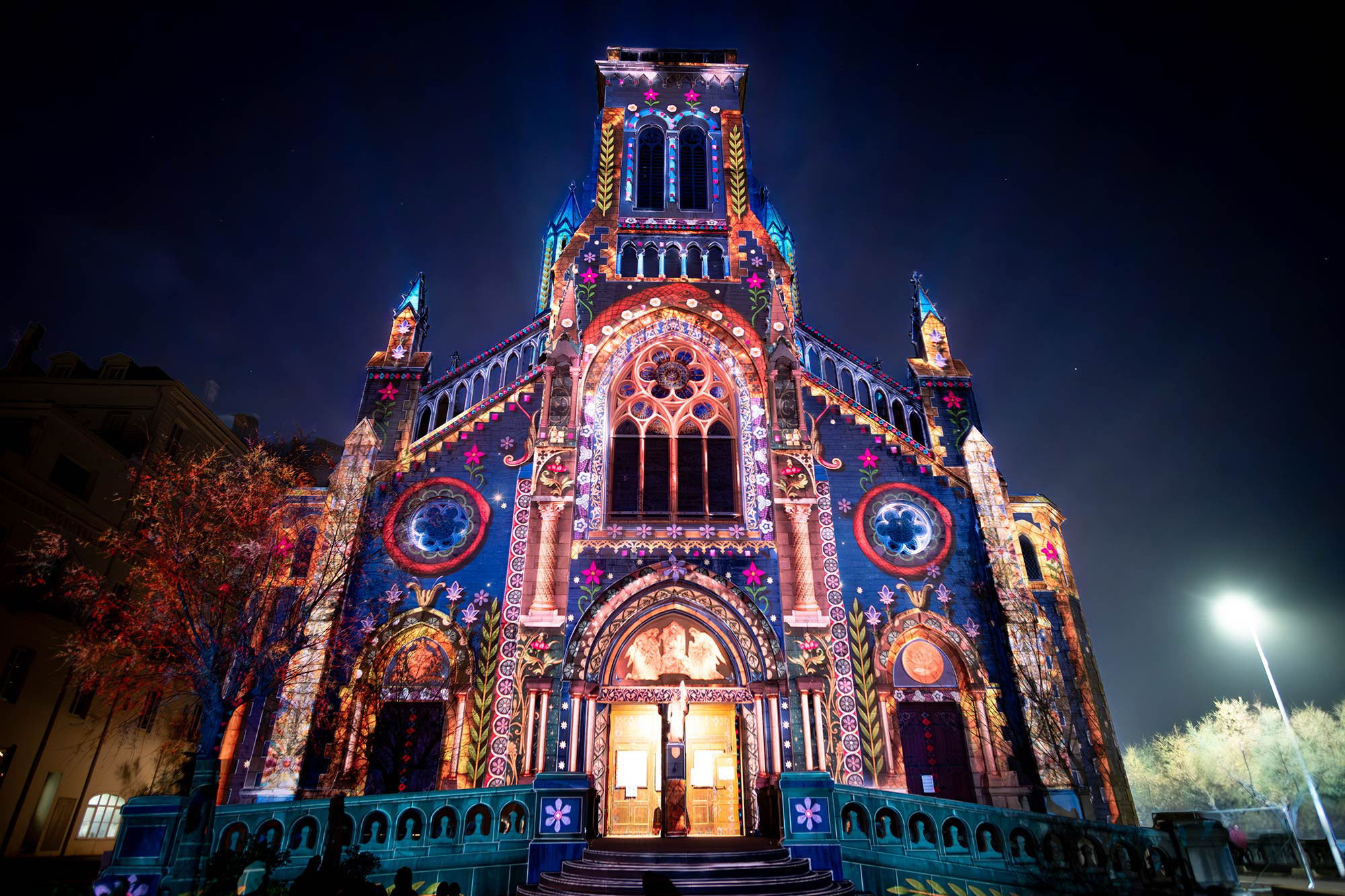
Leslie Epsztein and Camille Gross are French artists specializing in architectural projection mapping and immersive visual experiences. Epsztein trained in graphic design as well as cinema and drawing, while Gross graduated in scenography from ESAT in Paris. Their complementary backgrounds shape a shared visual language built on both technical precision and narrative sensibility.
Before developing their own practice, both artists worked independently with creative agencies, artists and cultural institutions, building experience on projects for international festivals and major cities. Their collaboration began in 2016, and they have worked together as a duo ever since.
Since then, Epsztein and Gross have produced projection mapping work across France, Ecuador, the United Kingdom, Poland and the United States, developing projects for major light festivals and landmark sites throughout Europe and North America. Alongside their joint practice, each continues to develop independent projects for international festivals, experience that feeds back into their shared work.
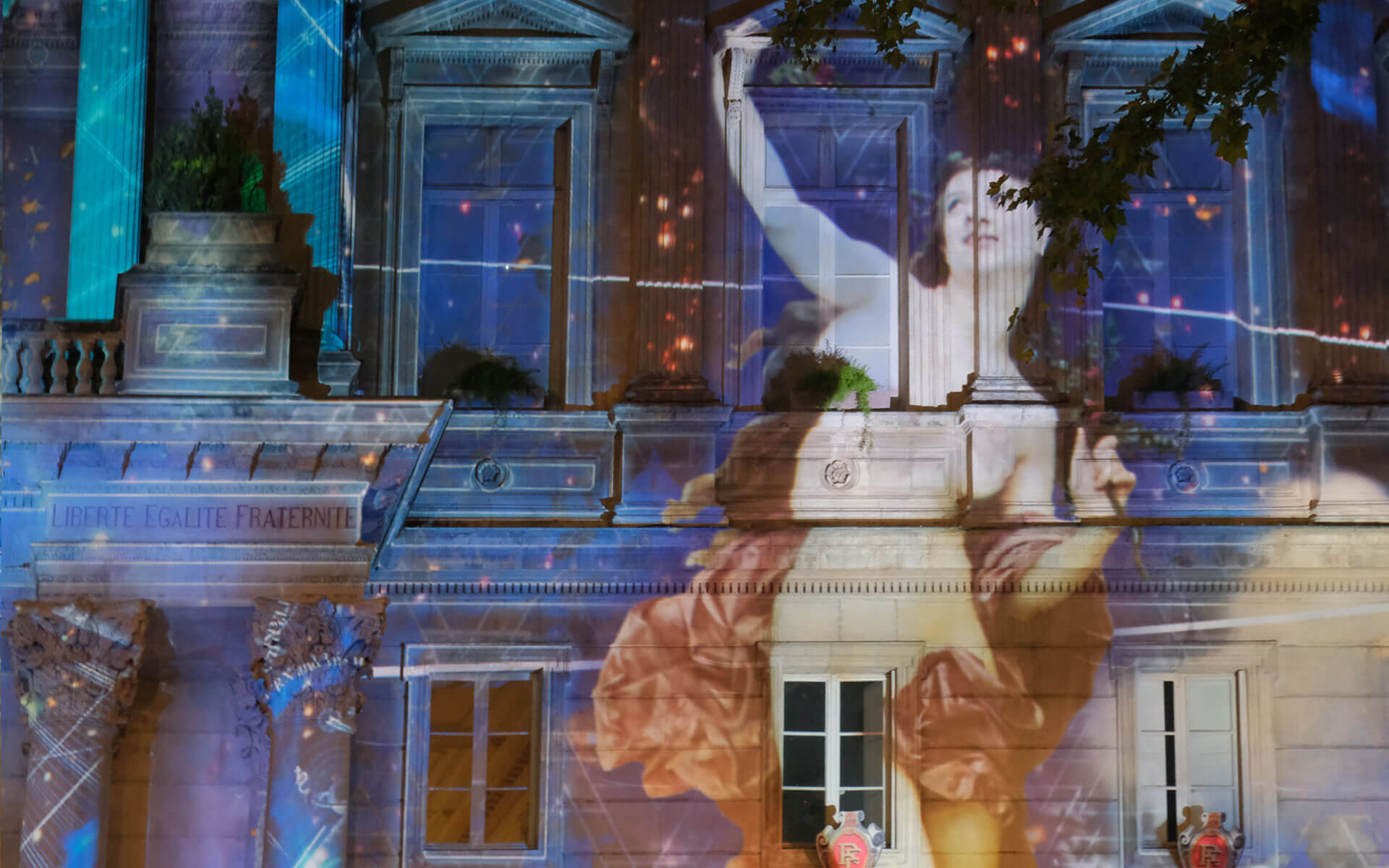
Their artistic language is defined by a dreamlike aesthetic, refined graphic sensibility and meticulous attention to detail, frequently exploring themes of time, memory and transmission. Drawing on mythology, history, nature and the cultural heritage of the places they illuminate, they use poetic storytelling to reveal the spirit of the architecture they work with.
leslie-epsztein.com
camillegross.com
-
Image
-
Image
-
Image
About the artwork:
Axis Mundi
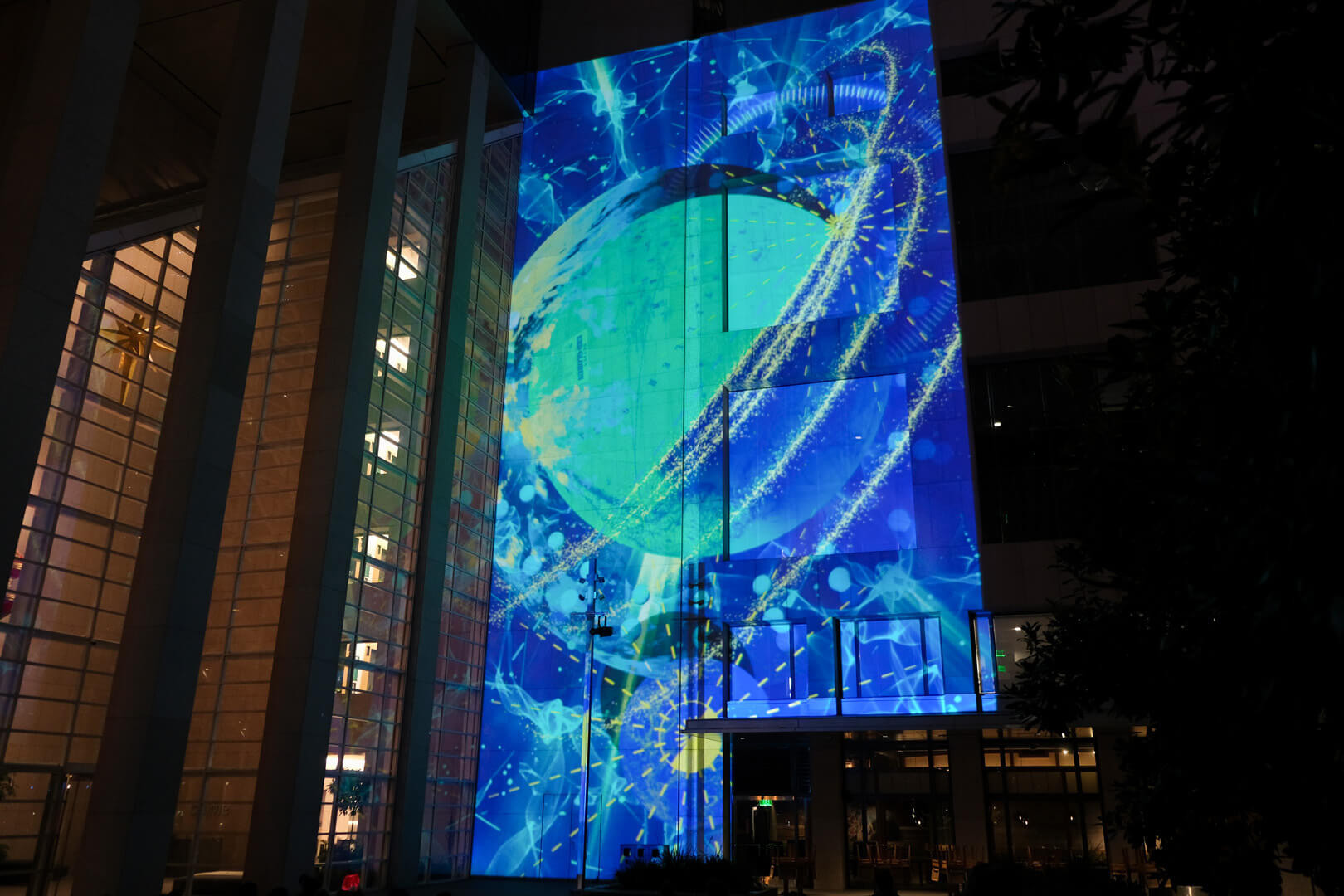
Axis Mundi is a poetic interpretation of the theme “Remember Forward,” exploring how memory shapes the future. The tree serves as the central thread of the piece, representing society itself. A multitude of origins, stories, and identities converge and grow together, nurturing a living entity – singular yet collective.
The architecture of the Memorial is the starting point of our narrative. Its horizontal frieze becomes a landscape of roots and collective memories, while the tower forms an axis connecting earth and sky, symbolizing transmission, elevation, and hope. Our visual universe draws inspiration from nature, history, mythology, and the Art Deco architecture of the Memorial. Organic forms, flowers, curves, and feminine figures all play an essential role.
The Memorial’s four statues – Courage, Sacrifice, Patriotism, and Honor – punctuate the piece as guardians of this journey. Each has its own visual and musical sequence, accompanying the tree through its transformations and embodying a different stage of the journey.
A compass also runs throughout the narrative: initially unstable, it gradually finds its balance. It expresses the idea at the heart of Axis Mundi: remembering does not simply mean looking back at the past, but also choosing the direction in which we want to move forward.
We hope the audience will leave with a sense of wonder and hope, aware that memory is a living legacy that each of us contributes to nurturing, helping shape a future of unity and peace.